
Edessa retained its importance during the Εarly Christian period, as is attested by the remains of basilicas erected on the site. From the end of the 7th century A.D. onwards, the city was restricted in the castle of Vodena, in the area of the contemporary city.
Excavations on the site began in 1967 and are still continued in the area of the acropolis and the lower city as well as in the cemeteries outside the walls, along the Via Egnatia. The excavation finds confirm the importance of the city, its social and economic organization through the centuries and its commercial exchanges.
Among the most important monuments on the site are:
- The fortification walls of the ancient Edessa were constructed in ca. 300 B.C. and repeatedly repaired during the life span of the city. They are among the best preserved fortification walls in Macedonia, standing up to the height of 5 m. The construction of the South Gate in particular, which includes a circular courtyard inscribed in a rectangular tower, follows the main principles of defensive architecture as it is described in the ancient literary sources.
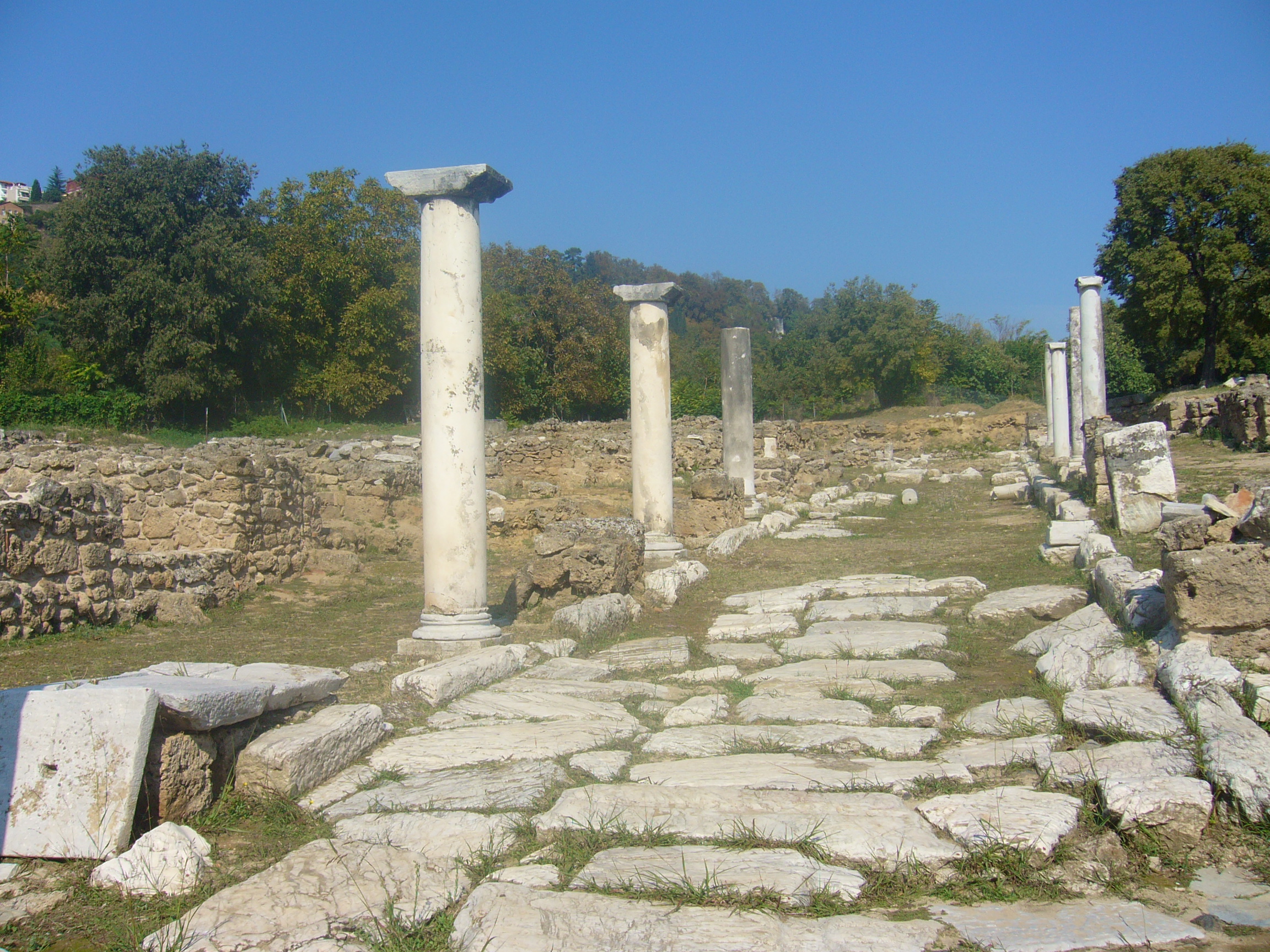
- The monumental paved street crossing the city. Marble columns and built pillars are preserved along the sides of the wide street. One of the columns is covered with inscriptions registering acts of manumissions. The collapsed columns that stood along the sides of the street have been restored.
s: http://www.gtp.gr/TDirectoryDetails.asp?id=14647


 Αναρτήσεις



0 σχόλια:
Δημοσίευση σχολίου
Σημείωση: Μόνο ένα μέλος αυτού του ιστολογίου μπορεί να αναρτήσει σχόλιο.